
Waterjet Cutting for Plastic and Polymer Components 

Cut components from the sheet without any heat and avoid the heat-affected zone from a thermal cutting process. 

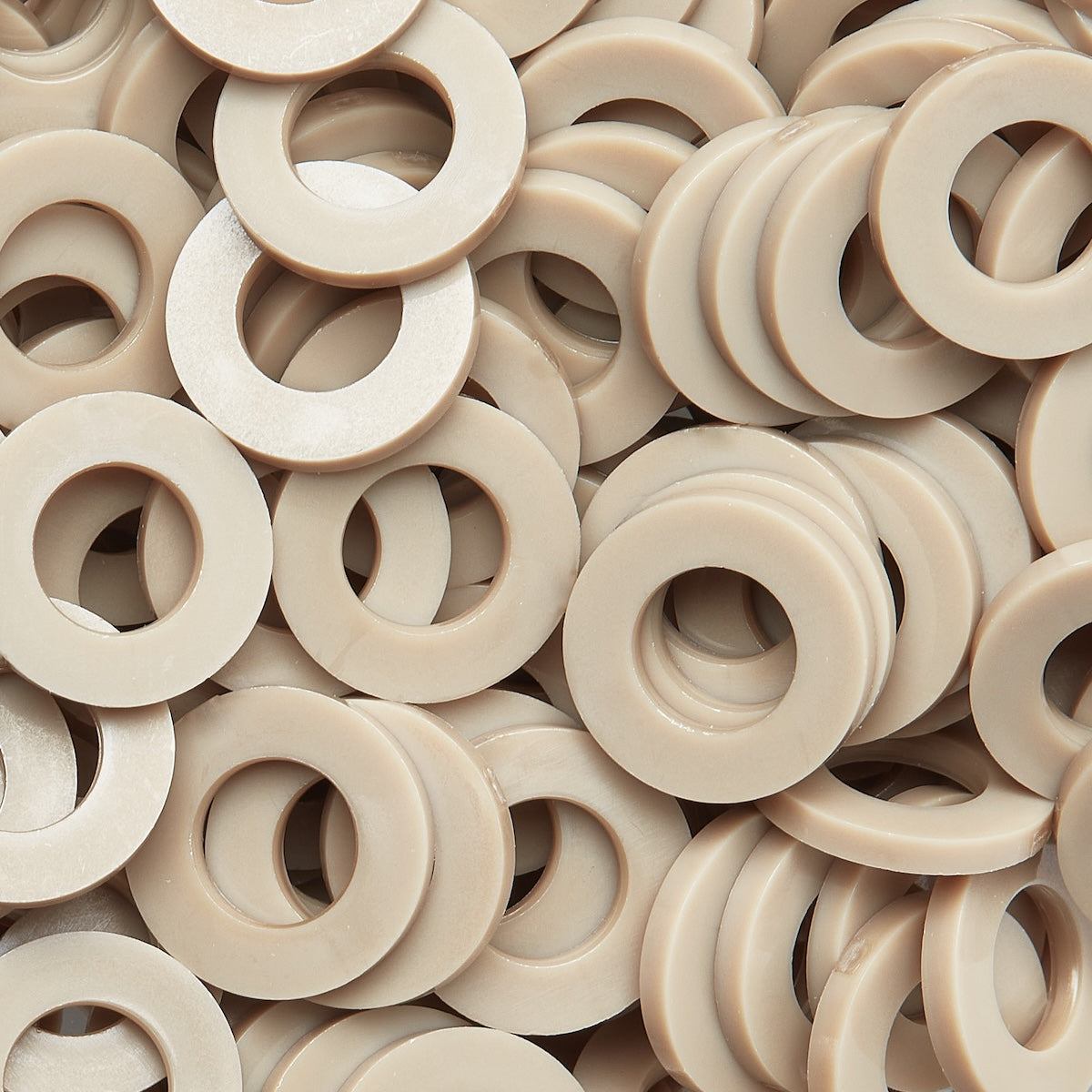
Waterjet cutting can produce washers, spacers and blanks for further machining. Suitability depends on the material grade, thickness, geometry and required finish.

Request a Custom Component Quote →

What is waterjet cutting? 

Water jets combine water and abrasive garnet to create a high-pressure stream that can cut through various plastic sheets. Similar to laser cutting, a waterjet cutter is guided by CNC instructions based on a component's CAD drawing. However, unlike laser cutting, waterjets create no heat-affected zone damage, making them a beneficial manufacturing method. 

Why Choose this Route: The Benefits for Polymer Components

  • 1. Cold Cutting

    Avoids Heat-Related Edge Damage

    Polymers benefit from the cold-cutting process, as it relies on erosion rather than melting or burning. Avoids warped or distorted edges and creates a zero heat-affected zone. 

  • 2. Flexible Profiles

    Change shapes without a new die

    Waterjet cutting allows fast design changes because it is digital and software-driven. You don't need expensive physical dies or custom tooling. CAD-to-CNC workflow allows this. 

  • 3. Sheet Use

    Nest parts together

    Arrange multiple components within the stock to use the sheet effectively. 

  • 4. Next Operation

    Prepare blanks for machining

    Cut the initial profile, then machine precision features where needed. 

What components can be produced? 

Flat profiles at a consistent stock thickness are a natural starting point.

  • Mounting Plates

  • Wear Pads & Guides

  • Blanks for CNC Machining

  • Custom Washers & Spacers

  • Gasket Profiles

  • Insulating Plates & Barriers

Which plastics can be waterjet cut? 

PEEK Because of the cold-cutting, PEEK's crystallinity is retained. 
Acetal / POM POM is protected from heat-stress when water jet cut. 
PE / PP Highly cost-efficient method to produce uniform parts. 
Reinforced Polymer: PEEK GF 30, RENY, PA66 GF60 An abrasive water mixture is used to cut these materials. Unlike traditional machining using saws or drills, which dull quickly against the harsh glass fibres, the high-speed stream is able to cleanly erode. 
PTFE Avoid toxic fluorine-based fumes and heat-affected zones created during laser cutting PTFE. 
Nylon / PA Water jet systems can cut through a range of stock thicknesses. 
PC Create superior edge quality, high tolerances and waste little material when you water jet cut polycarbonate. 

Our Process:

1. Design Review

We review your component specifications and CAD drawings, to understand the part's outline, holes and dimensions.

2. Material Selection

We help you choose the right material, sheet thickness, quantity, and any required tolerances.

3. Precision Cutting

The CNC water jet cutting machine will be programmed to follow the path outlined in the CAD drawing.

Inspection and Certification

Your component(s) are then fully inspected and sent to you with a CoC.

Get your quotation here in 24 hours: 

Request a Custom Component Quote →

What to include: 

  • Dimensioned drawing and available CAD file
  • Material and grade
  • Thickness or finished dimensions
  • Quantity and repeat demand
  • Critical tolerances and finish
  • Application and delivery date
  • Certification or inspection needs
Request a Custom Component Quote →

Frequently Asked Questions

This depends on the required edge finish and how the component will be used. Cut edges may show visible striations or a slight taper. Components with demanding surface-finish or dimensional requirements may need a secondary finishing operation.

Water jet cutting can suit one-off components, prototypes and small production runs because it follows a digital cutting path without requiring a dedicated cutting die. Its suitability for larger quantities depends on the part design, material and overall production cost.

Provide a dimensioned drawing or CAD file, the polymer type and grade, material thickness, quantity, and required delivery date. Highlight critical tolerances, edge-finish requirements, and the component’s intended application so the quotation can account for your requirements.

Achievable tolerances depend on the material, thickness, geometry and cutting settings. Include any critical dimensions and tolerances on your drawing so they can be reviewed before manufacture. Features requiring especially tight tolerances may need additional machining.